Irini Georgi

What dating apps really have to offer

Dating apps entered our lives within the last decade. Online dating already existed through social media or dating websites (mainly in the U.S.), but apps made the whole thing far more accessible and widespread, because you literally have them in your hand all day through your phone.

What they offer us is choice. It’s like being in ten or a hundred bars every night, while sitting at home in your pajamas. That didn’t exist before. You had to seize the moment when you were out and actually make a move, otherwise you’d have to wait until next Saturday night.

Dating apps also brought what we call an intentional approach to dating, that is, the ability to date with purpose, something people have always wanted, but couldn’t easily do before on their own initiative.

You couldn’t just decide to go on a date because you felt like it; you relied on introductions through family (matchmaking), community, or church. In short, dating apps are a valuable tool, as long as you learn to use them safely, responsibly, and a little cleverly.

But it’s important to note: through apps you meet people. You don’t date them. In reality, they’re introduction apps. You meet another human being, the app simply does the introduction. “Romeo, this is Juliet. You both enjoy drinking latte and going for walks. Good luck.”

Once you’ve met the other person, whatever relationship develops between you becomes something self-standing, completely independent from the app. It’s important to understand this, because very often people find excuses for themselves and justify their behavior in app-based connections, avoiding accountability.

But really, people we meet on the apps aren’t different from people we meet elsewhere. We owe them the same level of respect we owe to anyone in “real life”.


Why does Gen Z seem to use dating apps less than previous generations?

First, there’s a common saying about dating apps:

“Everyone hates them but everyone’s on them.”

As for Gen Z, part of the phenomenon has to do with the world they inherited, which unfortunately isn’t the same as the one previous generations grew up in.

Repeated economic crises, the pandemic, the housing crisis, growing conservatism, the collapse of dreams and expectations, and a general sense of hopelessness about the future, all of these have contributed to what we now call the male loneliness epidemic.

These factors make this generation operate under a cloud of uncertainty, unsure whether they’ll ever live what we once called a “conventional life”, with a house, family, and children.

That can lead to a kind of resignation in the search for partners, especially among men who still identify with the traditional gender role of being the provider.

On the other hand, this generation, the dating app natives who grew up with the apps, are also in a position to reject them.

A more progressive segment doesn’t want to depend on tech giants (broligarchs), algorithms, or the AI that has now entered the dating space. They crave more authentic interactions, not mediated by technology.

(A more conservative segment, on the other hand, wants to get married at 22, with trends like “trad wife”, and some young women’s dream is to stay home baking bread and raising children),

Meanwhile, studies record “swiping fatigue”, meaning exhaustion from constant app use, from superficial connections, and from the vicious cycle of situationships that often emerge through them.

We also see a longing for something more meaningful, a nostalgia for something they never really experienced, like the “meet-cutes” of 90s romantic comedies, those magical accidental encounters in real life, that tend to disappear.

There’s a connection to social media trends like “main character energy”, seeing yourself as the protagonist of your own movie and manifesting. In a way, these are coping mechanisms for a pretty dystopian reality, where the only answer and solution seems to be magical thinking.

It all comes back to something I often tell my clients: You have to actually do something to meet new people. You can’t expect a gorgeous neighbor to knock on your door asking to borrow a cup of sugar, or to find the love of your life in your fridge. Unfortunately, life isn’t a rom-com.

If you want to learn how to use dating apps the right way, I can help you build your ideal dating profile with the right photos and a bio that represent you in the most flattering, authentic way. Fill out the form and we’ll take it from there!

Share:

How to get out of a situationship

I often talk to women who tell me about someone they’ve met, maybe they’re in a situationship, or he’s “not ready for a relationship,” or he’s avoidant, emotionally unavailable, “doesn’t want to complicate things,” or he breadcrumbs them, offering merely crumbs of attention, texting now and then, or they spend time together and then he disappears.

And on one hand, they know that what they’re living through is emotionally draining and that they should make the decision to end it, but on the other hand, they just can’t, because the connection with him was incredible.

I completely understand. When you can talk with someone and laugh all night, and the sex is great, it feels like you have everything. It feels insane not to be in a “real” relationship together. No one else makes you feel like this. It’s amazing when you’re together, and he says he doesn’t want to lose you or what you have. So why doesn’t he want exclusivity, or to see you more often, or make it official?

One moment you tell him you’ve had enough and it’s over, and he says he’ll miss you but he understands. Then you go back to him because he messages you or you miss what you had, or you think maybe you didn’t try hard enough to show him you’re The One, and if you just give it one more chance, he’ll finally realize it or be scared enough of losing you to commit.

You have to believe me: the right person for you is never someone who isn’t ready. Connection is wonderful but it isn’t everything. It’s not enough. It has to exist alongside with readiness, with willingness and intention to build something with you. Neither is enough on its own, you need both.

And sometimes, you may need to sacrifice the sizzling spark and the dreamy connection and settle for something that feels a bit less intense, but is sure to go further, because it has the time and space to grow and evolve.

So what else is there? If you need closure, send one final message. Say you’re stepping away and you want him to respect it, and don’t look back.

It’s the right decision, even if it hurts. (And it will). But you’ll think about it one day when you’re with someone who truly chooses you, and you’ll laugh. Or rather, you won’t think about it at all.

If your story isn’t quite over yet, and you believe there’s still a chance the relationship status could change, I can help you:

  • Analyze the facts and what’s really happened between you
  • Evaluate the signs and their meaning realistically
  • Decode his messages and see what’s hidden beneath words and actions
  • Regain control of the communication with calm and confidence, without extreme reactions or impulsive moves.

It’s crucial to know where you stand and to learn to send the right message at the right time.

We don’t pressure or manipulate people, we simply project our authenticity at our best, and invite the other person to meet us there.

If there’s real potential with this person, then with the right approach, we can greatly increase the chances of something healthy unfolding. But only if it’s truly right.

If you want to give this relationship one last chance, let’s work on it together. I don’t do magic, but it’s truly magical how much things can change with emotional maturity and clear communication. Fill in the form and we’ll talk!

Share:

SOS Heartbreak: how to deal with a break-up

SOS heartbreak: how to deal with a break-up

People often reach out to me asking for urgent breakup sessions. I’m always there, because I understand.

Even a breakup after only a few months can feel deeply painful and disorienting, even for the person who chose to end it. All the more so if it was a long relationship or if you were the one who got broken up with and didn’t see it coming. The shock, the disbelief, the emptiness, it can all feel unbearable. You just want something to hold on to.

There are many things we grieve in a breakup, and we often don’t realize it:

The person themselves.
It’s natural to miss the person you shared things with, emotionally and practically. You miss the emotional safety, the feeling that someone was thinking of you, waiting for you. But you also miss the practical things: shared activities, someone to do things with, the empty side of the bed, the hug waiting for you at the end of the day. Reach out to friends and ask for both emotional and practical support.

The idea you had of that person.
Especially in short relationships, we tend to build an idealized image of the other person. Even if it wasn’t real, we still mourn the fantasy we had created. “It doesn’t matter who you actually were, I need to grieve who I thought you were.”

The expectations you had for the relationship.
Relationships are dynamic, not static. They evolve whether we want them to or not. It’s impossible not to have expectations, even when we’ve been told not to. Having expectations is part of being human, even though it’s often a source of disappointment. The person who expects nothing is either a zen master or emotionally dead.

The habits, the inside jokes, the world you built together.
That’s one of the hardest parts. Every relationship is its own little universe full of secret code that only the two of you understood. For a long time, you’ll want to share things with them that come up each day, and you won’t have anyone who truly “gets” them, because they were yours alone. For a while, try saying those things out loud as if you were telling them to your ex, explaining why they’re funny, while knowing it’s wiser not to actually reopen that wound.

The person you were with them.
Each person we love brings out a slightly different version of us. The best relationships bring out our best selves. It’s natural to miss that version of yourself, especially when comparing it to your sad, post-breakup self. (On the other hand, in bad relationships, we lose ourselves, and the breakup can feel like freedom.)

The time and effort you invested.
Humans hate losing their investments. That’s why we often stay in situations longer than we should, to avoid feeling that all the time and effort we gave it went to waste. Yes, you’ll grieve the investment, but you’ll grieve more if you stay and lose even more.

The future you won’t live together.
Every action we take creates one possible future and erases countless others. That’s life and that’s why we often wonder “what would have happened if…?” It’s natural to grieve the future you imagined, especially if it felt ideal. But that’s the trap of idealization. The goal now is to make the real future as good as possible.

The feeling that you’re starting over.
I know it hurts, and it feels like you’ll be starting from zero, but that’s not true. Every relationship teaches us something and helps us grow. You are not the same person you were before this relationship, and as time passes, you’ll see how much stronger, wiser, and more self-aware you’ve become. You’ll have more to offer and more capacity to receive next time.

To heal from a breakup, we need to face these losses head-on and allow ourselves to grieve fully. We need to notice the empty gaps and slowly fill them. Gradually, we start redefining who we are outside the relationship and reclaiming our sense of self so that we can move forward.

At the same time, we need to manage the dark thoughts that make us question our worth or our chances for happiness. Those thoughts need reframing, in order to change the story we tell ourselves.

You can get through this and you will. If you need support and tools to keep your mind steady and build the framework to move forward, I’m here for you. Fill in the form, let me know you’re going through a break-up and help will be on the way.

Share:

Apart from my TED talk, see me or listen to me speak:

See even more here

Book a session

© 2023 Irini Georgi

Share:

Not just dating coaching

If you follow dating coaches on social media or have watched Later Daters on Netflix, you might have a very specific idea of what a dating coach does. Let me stop you right there. That’s not who I am.

The whole concept might seem very life-coachy to you or you might think it’s about teaching Pick Up Artist tricks or just charlatanism. On top of that, since I openly do this from a feminist perspective, I often hear men say that because feminists don’t want to meet men, so what I must be doing is teaching women to hate and avoid them. Let me stop you again. I don’t do that either.

What I want is to destigmatize dating in general because we don’t take it seriously enough. Meanwhile, we take marriage and family very seriously, which makes me wonder, how are you supposed to meet someone to marry? Will you open the fridge and find the love of your life inside, right between the cheese and the half eaten leftovers?

We need to remove the stigma from the dating process and from any tools that make it easier, like dating apps. It’s a shame that being on dating apps is still considered embarrassing for many people. As I often say, it’s like looking for a job or to fill a position, but being too embarrassed to create a profile on LinkedIn. But my thoughts on dating apps are all on my interviews, I won’t bore you here.

It’s not just about the dating process itself. It’s about how we approach the process, what baggage we carry, and what tools we use. In dating and relationships, we bring our whole selves. Everything that we are. From social norms and stereotypes to personal beliefs, values, ideals, and even traumas and repetitive patterns that have proven to lead nowhere.

Regarding my coaching, I often talk more about the work I do with men, because otherwise, men assume it’s not relevant to them. That’s because men don’t pay much attention to what women say and, when they see women speak, they often watch with the sound off.

I coach both men and women, and the work I do depends on each person’s specific needs and the level at which I can meet them. With women, we often go into deeper issues and do what we call “deep work” because they’re more likely to have gone to therapy or to have done some work on themselves, while men might mainly be interested in advancing their communication skills. But not all men are like that, and not all women are either.

Generally, my coaching goes way beyond first approaches and texting or guidelines for first dates. We go much deeper. For example:

For a man who told me his goal was to build confidence, I sent the following:

 Confidence is crucial in dating and relationships, although people usually view it superficially. In reality, the foundation of confidence is self-esteem, that’s what it’s built upon. In our culture, we don’t talk enough about how to build solid secure self-esteem.

We can work on this together. We can identify the limiting beliefs that hold you back and create your own hero story, so you feel like the main character in your life. And of course, we’ll explore what exactly is happening in your relationships with women—what mistakes were made in the past, what needs redefining, improvement, perspective shifts and new approach strategies.

For a woman who told me she was tired of dating and felt like she always messed things up and that it was her fault, I replied:

I understand that modern dating creates a sense of frustration, and often women, in particular, wonder if they’re doing something wrong. The answer is that while we all generally have dysfunctional patterns that we project in romantic relationships, that doesn’t mean things are easy or that it’s entirely our fault. The only thing we can control, however, is our own actions.

It’s worth examining your Relationship History to deconstruct what has happened so far, understand the past and gain insights for the future so you can break out of potential vicious cycles and make wiser choices. You may need to learn to use new tools and adopt new habits and behaviours to unlock blockages and move to the next level.

 This is the work I do. I also wanted to note a question from my interview on fortuno.gr. The male journalist mentioned a line he heard from a woman:

“Sorry, I can’t go on with this. I don’t know how to behave with men who aren’t assholes.”

His question was:

“How easy is it for people to change the pattern of who they’re attracted to, even when they’re aware it’s harmful?”

 I answered that this is the million-dollar question. This is where therapy comes to play, because our choices and behaviours in relationships are rooted in our trauma. The logic is, “we marry our unfinished business,” meaning we don’t choose partners who are truly suitable for us or who are likely to bring us closer to happiness. Unfortunately, we often choose those who remind us of a familiar unhappiness.

We keep entering these relationships, trying to fix our past and change the ending. That’s why “nice guys” seem boring.

It’s not because women want “bad boys”. It’s because people who haven’t done enough self-work are programmed to seek the familiar in their relationships, even if it’s painful, in an attempt to rewrite the story and finally find resolution.

In my work, it’s extremely helpful to understand what happened in the past that led someone to behave and function the way they do now. Even if they can’t see the patterns clearly, we see them together.

It’s important to be aware that everyone is made up of dozens of coping mechanisms developed in the past for self-protection, but are now dysfunctional. Recognizing and intervening to change them is key.

Another useful aspect is that of core beliefs about oneself that have been shaped by past traumas. We can also intervene in these and start challenging them. In my coaching, we do exercises to identify them, but it helps when people have heard about all this before because hearing it once is not enough. We need to hear the same things and relate to what we hear many times, until something inside us begins to shift.

In general, the coaching I do includes trauma awareness, because while true healing is about the past, coaching is about the here and now, with clear, practical steps. My coaching also involves education, mainly for men, as well as self-exploration exercises for everyone, along with tools for relationships and communication. This way, the pieces of the puzzle come together and work in synergy.

If any of this resonates with you, if you feel the time has come and you’d like to see what we can work on and achieve together, fill out the form below, and I’ll get back to you. Let’s do this!

Share:

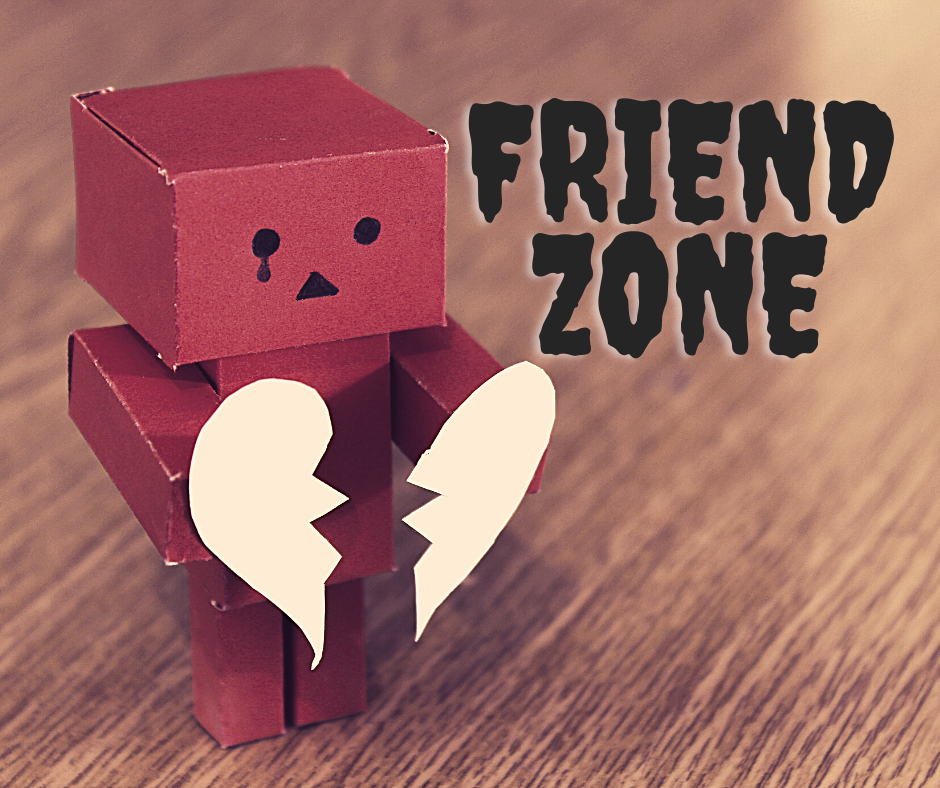
How to avoid the Friendzone

Friendzone

How to avoid the Friendzone

Feminism rejects the friend zone concept and rightly so, as it’s used by men who pretend they want to be friends with women they are attracted to, in order to enter their circle, gain their trust, wait until they’re feeling vulnerable and then try to get them to have sex with them. This is lying, manipulation, betrayal and, of course, misogyny. I’m not talking about this. What I am talking about, is the accidental friend zone, when you didn’t take action and show initiative early on, and then you find the momentum is gone. That said, here’s my advice.

1. Start as you mean to go on

Yes, it’s scary and you risk rejection, but you need to communicate your romantic interest sooner rather than later. This can help avoid misunderstandings and mixed signals, and show her you’re not just looking for friendship.

 2. Be clear but not creepy

Don’t stop being friendly and smiley, many men turn creepy when they want to express interest. Build a special connection, flirt, be funny, compliment her or, even better, tease her lovingly (meaning without impacting her self-confidence, it’s called benevolent teasing). Ask her out making sure she understands it will just be the two of you.

3. State your intentions

Expressing your feelings directly is the ultimate challenge. If you want to minimize the risk, try asking “have you ever wondered what we’d be like as a couple?” or say you had a dream that you two were kissing. You’ll judge if it’s a good idea to proceed by her reaction.

4. Respect her decision

If she doesn’t feel the same way about you, you have to accept her choice and respect her boundaries. You can do this by giving her space and focusing on yourself, on your hobbies, or meeting new people.

5. Time to move on

If you have feelings for someone, it’s very hard to stay away from them, especially if they seek out your company. But remember, if you like them romantically, it’s not friendship. You’ll be torturing yourself if you try to remain friends, and it will keep getting worse. Do yourself a favour and move on.

Share:

Apart from my TED talk, see me or listen to me speak:

See even more here

Book a session

© 2023 Irini Georgi

Share: