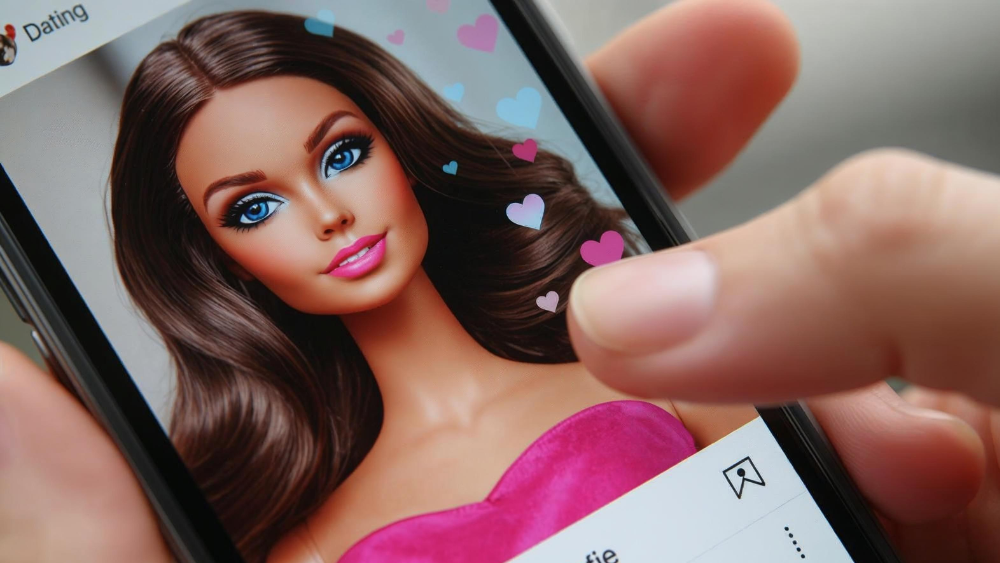
Dating apps weren’t designed to bring us closer to love. They were designed to keep us “inside” as long as possible. They’re capitalist products, built to sell subscriptions and capture our attention, not to cure our loneliness. That means the system doesn’t really work in our favour. It plays with our FOMO, competition, and an overload of choices that don’t translate into real opportunities.
But, and this is the crucial point, the fact that the platform doesn’t work for you doesn’t mean it can’t work with the right use. To find quality connections in this environment, you need awareness, emotional maturity, and a clear strategy. The people who do the inner work, who know how to present themselves authentically and communicate without games, stand out immediately, precisely because most people don’t do any of that.
Within the system, men and women end up playing the same game with completely different rules, and they rarely understand the other side’s reality. These asymmetries aren’t personal. They’re structural. But they shape everything: who swipes, who matches, who messages, who gets overwhelmed and who gets ignored. Here’s what the research, and real lived experience, actually shows.
- Men face scarcity. Women face overwhelm.
Most men get very few matches. Most women get more attention than they can handle.
This is the core imbalance, and it’s backed by almost every study on online dating.
- Men swipe more, initiate more, and face more silence.
- Women receive more messages, more sexual content, and more harassment.
The result?
- Men feel invisible.
- Women feel unsafe.
These emotional realities drive the behaviours on both sides. Men cast a wide net because they get so little feedback. Women become selective because broad filters are a safety strategy, not an ego trip.
- Algorithms exaggerate inequality, not personality.
Apps don’t show all profiles equally. They promote the most “engaging” profiles and bury the average ones. Research (Bruch & Newman, Tinder’s own internal data) shows:
- The top 10–20% of men receive most of the likes from women. (Specifically on Tinder, where the gender distribution divide is the biggest).
- The average man barely gets seen.
- Women get overexposed to a small minority of men, many of whom aren’t actually looking for a relationship.
This isn’t a moral failing on either gender. It’s a marketplace distortion that makes both sides miserable.
- Men swipe on possibility. Women swipe on probability.
Behaviour diverges sharply:
- Men operate on the “why not?” principle. They swipe broadly and filter later.
- Women operate on “give me one good reason.” They filter first and engage only when someone feels safe, interesting, or intentional.
This is why men often feel rejected before they even get started. The bar women use is higher, and for good reason: safety, emotional labour, and social cost all weigh heavier on them.
- Men take more risks, women take more precautions.
Studies on risk-taking (David & Cambre, 2016) show men are more inclined toward gambling-style behaviour. On apps this translates into:
- rapid swiping
- more experimentation
- more willingness to initiate with strangers
Women, on the other hand, must navigate harassment, stalking risks, and security concerns. So their “selectiveness” isn’t entitlement — it’s survival.
- Men prioritise physical traits, women prioritise internal or socio-economic traits depending on ideology.
The Hanson (2021) findings still hold:
- Men: appearance first, everything else second.
- Conservative women: economic and status markers.
- Liberal/progressive women: emotional intelligence, inner work, values alignment.
This is crucial: Progressive women aren’t looking for perfection, they’re looking for men who are emotionally literate, self-reflective, and not threatened by equality. That pool is smaller but not non-existent, and the men who do the work stand out dramatically.
- Both genders end up frustrated for opposite reasons.
This is the part almost nobody says plainly:
- Men assume women have endless options, so they feel resentful or hopeless.
- Women assume men are dangerous or unserious, so they feel guarded or exhausted.
These aren’t based on bad intentions, they’re based on the structure of the platforms themselves. The system creates unrealistic expectations, distorted perceptions, and a generalised distrust that has nothing to do with the individual person behind the profile.
So is it hopeless? No. But it is unrealistic to “just wing it.”
The people who thrive on dating apps today aren’t the hottest, richest, or youngest.
They’re the ones who understand:
- how the system actually works
- how the other gender experiences it
- how to present themselves honestly but effectively
- how to communicate with clarity, warmth, and intention
- how to regulate their emotions so they don’t sabotage promising connections
Apps amplify both your strengths and your weaknesses.
If you don’t understand the dynamics, you miss out.
What I help people do:
This is where my work comes in, and it’s the part the apps can’t do for anyone. I help men and women:
- Build a profile that communicates depth, uniqueness, warmth, and acts as a beacon to compatible people
- Understand the psychology of attraction in a progressive, evidence-based way
- Develop communication and emotional skills that create real connection
- Navigate dating apps with strategy instead of desperation
- Date in alignment with their values, not in reaction to trauma or scarcity
- Break patterns that keep attracting the wrong people
The dating landscape is unequal, but it’s navigable. Dating app structure matters, but skills matter more and inner work matters most.
When people understand the reality of the system and develop the right habits, dating apps stop feeling like chaos and start becoming an opportunity. Want to work with me? Fill in the form below and I’ll get back to you!