Irini Georgi

Cornell 7, male friendships, group chats & the digital bystander effect

A while ago, I made an Instagram post that said the following:

“Men are so strong, fearless and protective that they claim they’d be willing to take on bears, gorillas and tigers to save a woman, but they don’t dare tell their friends to stop making sexist jokes, harassing women or raping them.”

And then, naturally, a hoard of misogynists showed up in the comments to bully and insult me. “Are you saying there are men who tell their friends to rape or harass women?”

I kept explaining that what I was actually saying was that most men hear or see things that could indicate their friends are harassing or raping women, BUT THEY SAY NOTHING.

I’d even made a video explaining exactly what we want men to say to other men in different situations. (I’ll put the text towards the end.)

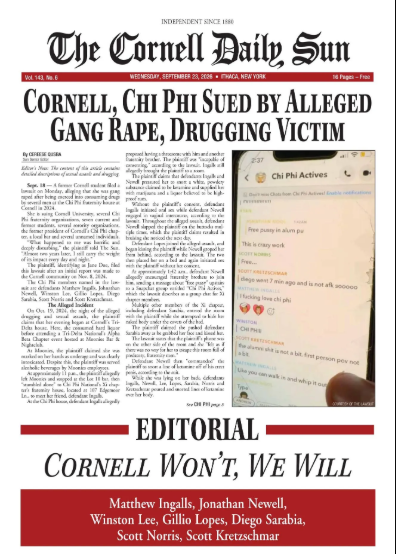
And then the Cornell case broke.

A few days after I learned what had happened, I posted a video about the horror Jane Doe had experienced. But I ended it with the thing that was troubling me the most: the group chat.

Because, yes, seven men (allegedly) decided to gang-rape her. But what did the other 50 men in the group chat do?

That was what I couldn’t stop thinking about. Almost more than the gang rape itself. Why?

Because there’s nothing we can do for the men who decide to rape someone. It’s too late. Teaching them about consent, or anything else, isn’t going to help. Even as someone who believes deeply in education, I know perfectly well how naïve that idea is. How delusional, actually. The problem wasn’t that these guys confused not saying no with “yes.” No.

Men like these know exactly what they’re doing. For them, the absence of consent is a bonus. It’s what they want. They want to dominate, humiliate and degrade a woman who doesn’t want to have sex with them, and is unable to fight back. And they want to high-five each other and bond through the whole experience.

For men like these, it’s too late for education. So the real issue is everyone else. The men who know what’s happening but don’t intervene.


Women’s Friendships vs. Men’s Friendships

The patriarchal stereotype about women’s friendships is that they aren’t true friendships, and that women are constantly fighting with one another. Part of this may have to do with the fact that women share genuine emotions with their friends rather than simply playing video games, playing sports, watching sports, or doing other activities together. (Is watching fishing a thing?) Their relationships are therefore deeper and more meaningful, involving vulnerability. But perhaps there’s something else going on, too.

Perhaps it has to do with the fact that when women see their friends doing something wrong, when they recognise shitty behaviour, they don’t automatically take their friend’s side. They don’t forgive everything as long as they themselves aren’t the target of the bad behaviour. They don’t blindly cover for their friends. They don’t look the other way. They don’t sweep things under the rug. They don’t say, “Oh, it’s okay, she’s my friend.”

If a friend does something wrong, not just to them or to another friend, but to anyone at all, women make an issue of it. They hold them accountable. They demand explanations. They expect repair and a change in behaviour. And if that isn’t enough, they cut them off.

That’s the difference.

Men proudly claim that male friendships are unshakeable and honest, and that men tell it like it is. Yet within their friendship groups, they avoid talking about anything that might disrupt the balance or challenge the stereotypes. They avoid rocking the boat.

They don’t call out problematic behaviour unless it’s directed at someone in their own group. Otherwise, and especially when it comes to women, even when they don’t actively bond through misogyny, they accept whatever their friends do without questions, accountability, consequences or confrontation.

“I didn’t see anything. I don’t know anything. I’m saying nothing.”

That, after all, is the bro code: a code of silence, himpathy and male solidarity.

Enter the Digital Bystander Effect

In a group chat, silence doesn’t necessarily mean agreement. But when everyone stays silent, the group can interpret that silence as agreement and acceptance. And that feeds a culture of violence, hatred and rape.

The digital bystander effect is the online version of the well-known bystander effect: the more people are present when something problematic is happening, the easier it can become for each individual to do nothing. It’s a paradox. The presence of many people makes each person less likely to take personal responsibility.

Responsibility becomes diffused throughout the group. “Someone else will speak up.” “Someone else will react.” “It’s not my business.”

In group chats, this is reinforced by the absence of the immediate social pressure that comes with a face-to-face reaction. You can read a message, say nothing and carry on with your life. People often choose passivity because they don’t want to get involved or draw attention to themselves.

In male group chats, this becomes particularly significant. Nobody wants to break the bro code and risk being cast outside the man-box. So countless men choose to remain silent, even when they disagree with what’s being said.

But they don’t have to agree. If 57 men see a message like that (or any message that objectifies or targets women) and nobody reacts, the silence acts as a social stamp of approval and acceptance. It’s digital locker-room talk, as Trump called it.

The person who sends the message encounters no resistance, and everyone else learns that this is a space where such things can be said without consequences. The sense of anonymity, distance and protection offered by a digital environment or a closed group can make people feel less accountable for what they say.

But words turn into actions. And we know that, from elite universities to the White House and the Epstein Files, closed groups can shape society as a whole and wield enormous power.

And yes, even Cornell lecturers agree that fraternities should be abolished. But fraternities are simply extreme versions of male friendship groups, where institutional rules don’t matter. The only rules that count are those of stereotypical masculinity.

Because patriarchy teaches men that they have two choices: be the hammer or be the nail.

Even if a man doesn’t really want to pick up the hammer, he sure as hell doesn’t want to be the nail. So he chooses the hammer. He can’t hit those above him on the hierarchy, but he’d better get busy hitting those below him.

He makes fun of men who rank lower on the masculinity scale, of “betas,” “simps” and weak men. He laughs at them. He bullies them. He puts them in their place. Whenever another man does something considered unmasculine, he insults him by calling him gay. He ridicules gay men. He keeps as much distance from them as possible.

And, obviously, he must be above women at all costs. He must keep them down, boot-on-neck.

Men are rewarded with status, safety, a sense of belonging and acceptance when they dominate women. In their everyday lives, masculinity is policed far more harshly than morality. And if a man values dominance, feeling powerful and proving his manhood more than he values not harming a woman, then rape becomes an almost… unforced outcome.

The consequences of being caught acting “feminine” are far worse than the consequences of acting immorally. Harming others is acceptable, while violating the rules of masculinity is unforgivable. You need power over women to preserve your masculine identity, and that requires constantly proving that you are man enough.

This is patriarchal male bonding, and it can start as early as primary school.

Right now, the only thing that can make a difference is the personal choice each man makes.

And let me remind you of something I’ve been saying for years:

Sometimes, saying “but I didn’t do anything” is not an excuse. Admitting you didn’t do anything, is a confession.


What can you do as a man, personally?

You can choose whether or not you want to maintain friendships that help sustain rape culture.

If you want to be a good man, speak up. Stand against cruelty, hatred, racism, homophobia and any behaviour you know harms people. Even if it costs you some friends. Yes, it takes courage. It takes bravery. But us feminists, we believe in you.

What if you’re in a group chat and someone says something you know is wrong? Something that perpetuates harmful stereotypes or could hurt women or other oppressed groups?

Don’t stay silent. Don’t be a bystander. Intervening doesn’t necessarily mean giving a lecture or publicly denouncing your friend. You can interrupt or defuse the message, name the problem, explain why it’s problematic or, when there’s a more serious risk, seek help or privately support the person being targeted.

What can you say to your friends when they talk about women?

  • If you hear jokes portraying women as inferior, stupid, crazy or fitting any other negative stereotype, don’t laugh. Ask: “What do you mean by that joke? Explain it to me.”
  • Say: “Don’t call women whores. If you do it again, you’re out of this group chat.”
  • Say: “Don’t talk about women as if they were objects or pieces of meat. Women are human beings.”
  • Say: “Rape jokes aren’t funny. Cut it out.”


What if it’s about dating and sex?

  • “She’s drunk. If you take her home, she can’t give consent.”
  • “Leave her alone. It’s obvious she’s not just not-interested, she’s actively trying to avoid you.”
  • “You’re being creepy / you’re violating her boundaries/ you’re making women uncomfortable.”
  • “Don’t touch women unless they’ve clearly shown you they want you to.”
  • “Don’t keep insisting or pressuring her for sex if she’s told you she only wants kissing and cuddling.”
  • “If she doesn’t seem enthusiastic, stop.”
  • “Silence doesn’t mean yes. If she doesn’t seem genuinely keen, why not just watch a movie instead?”
  • “Being in a relationship doesn’t mean automatic consent. She needs to say yes. Ask her if she wants to.”
  • “If she says no, stop insisting. Don’t try to convince or pressure her.”
  • “What she was wearing, where she was or how much she had to drink, has nothing to do with whether she wanted it.”
  • “It’s never her fault if you crossed her boundaries.”
  • “It’s not her responsibility to protect herself from what we do. It’s our responsibility not to harass women, violate or rape them.”
If you want to talk about this, in a personal or group session with your friends, just fill in the form below and I’ll get back to you.
Share:

Everything is Epstein. Everything.

I started writing about the Epstein files with the initial goal of talking about beauty standards. I’m laughing at my own naivety. Just so you know, I failed at that goal.

Very quickly, I realized we’re no longer talking about one man, we’re talking about Epstein culture. It’s another level of rape culture, but even that feels insufficient. I won’t end up talking just about that either. I’ll talk about everything. Epstein culture seems to have been a foundational layer of civilization and the right hand of power. Actually, not even the right hand of power. It was power itself.

In the files, we see men from every corner of the elite: politics, academia, Wall Street, Silicon Valley, royalty, Hollywood, top law firms, and, broadly speaking, the ultra-rich.

At this point, I want to offer a deep apology to conspiracy theorists, an apology I don’t know how we’ll deal with in the next pandemic, when we’ll once again have to argue that vaccines aren’t evil. Where do you even begin, and how do you salvage anything after all this?

The files pulled back the heavy curtain of patriarchy (and of “normal” reality) and revealed the truth about its darkest corners. For the first time, it’s so clear that society can’t look away and pretend not to see that these corners are rooted in the sexual exploitation of children.

We can’t look away, unless there’s a big enough distraction to force us to look elsewhere. Because it’s widely acknowledged that right now we’re spectators of a war that, while certainly intentional, may also have been sparked to make us forget the files and what was found in them. As it was vividly put: “If everyone named in the files was to be charged, the entire government, the entire System, would collapse.” So, don’t look. As Trump, whose name appears in the files thousands of times and who has been accused of sexual misconduct by 28 women, said: “Are you still talking about this?” It’s called diversion politics.

Years ago, I wrote that there’s a realization that comes after 30, especially after engaging with feminism, which is more disturbing and disgusting than the rest: that most of the male attention we received in our lives, came when we were 12–13 years old.

I said that young girls, as targets, are the easiest prey for a bad man, because they’re still embarrassed and afraid, they don’t react, they won’t shout, they won’t defend themselves.

The hundreds of men in the files are just the tip of the iceberg. These are billionaires, oligarchs, the people who run the world. That’s what I used to say, and I would add “not all men.” Today, I’ll say it seems to be a whole lot of them, especially those who aren’t afraid to act because they believe there will be no consequences.

As The Guardian puts it, the Epstein files offer women an unprecedented chance to “eavesdrop” on conversations they would never normally hear. It’s the most deeply disturbing and enraging lecture hall imaginable. We’re hearing what a (massive) global elite group of men think and say about women when they believe women aren’t listening.

Part of the tech elite hides behind a puritanical veil of respectability, although that veil is gradually dropping. You used to try to talk to ChatGPT about pornography and it would say, “this content may violate our usage policies.” But gradually, Silicon Valley is allowing conversations about sex. People already have romantic relationships with chatbots, waiting lists for rape dolls are huge, Elon Musk’s Grok generates non-consensual porn of women and underage girls without consequences, and on the social media accounts of teenage girls with millions of followers, countdowns to their 18th birthdays are openly posted, because that age marks their debut on OnlyFans. (With podcast bros as their “agents”, profiting both from the women on OnlyFans and from insulting them to their audiences.) We used to worry that “teen” was the most searched term on porn platforms. Those times feel innocent now.

Citizens Reunited states that the files revealed how closely the “broligarchy” (tech billionaire bros) was tied to Epstein’s circle. The sexual exploitation of children for profit is not a bug. It’s not a moderation issue. It’s a feature of the system. As Carole Cadwalladr says: “Epstein’s world is our world. That’s the darkest revelation of these files. The culture of child sexual exploitation is woven into the internet.” The algorithm tracks, identifies, exploits, and amplifies every related male impulse, and turns it into profit. The system is simply doing its job.

A culture that worships female youth and innocence despises female age and experience. That’s pedophilic culture. Hatred toward adult women and sexual desire for underage girls are two sides of the same coin.

We are crones, witches, hags. Because we are a threat. Because, with rare exceptions, see Ghislaine Maxwell and others who serve these men, we are protectors of children and of a world where rich men cannot act with impunity.

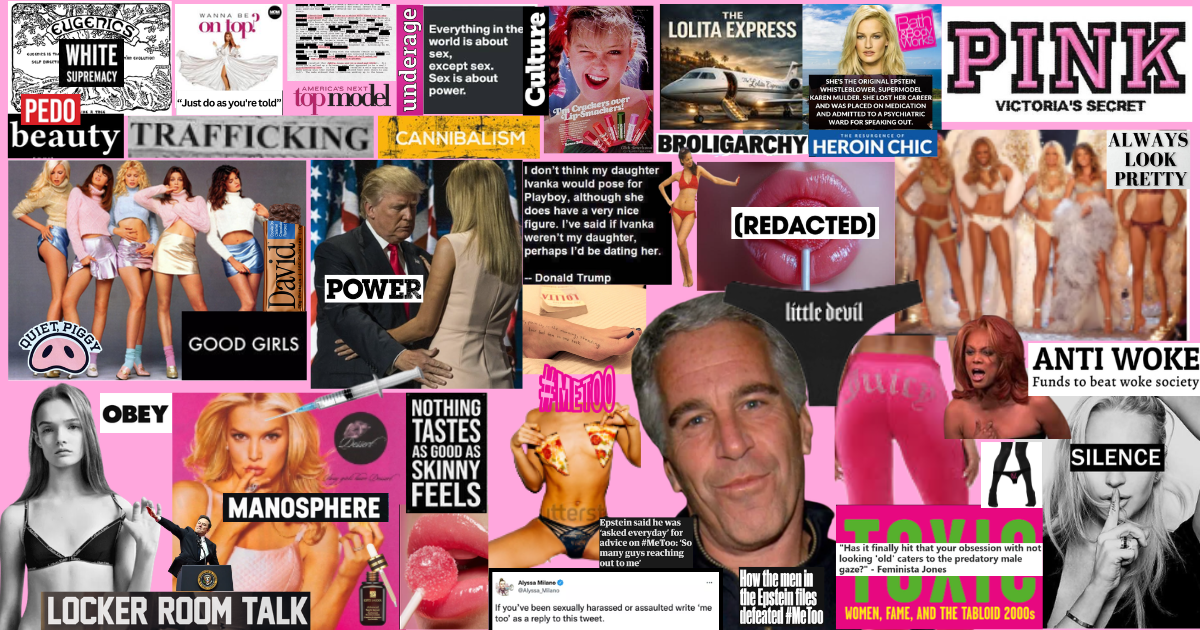
Amelia Gentleman in The Guardian references a phrase by editor Tina Brown: “we are living in a pedophile’s ball”. All this is happening while the beauty standards of the late ’90s and early 2000s have made a triumphant return. I spoke some time ago about the end of body positivity, the return of heroin chic and the extremely thin female body, along with low-rise jeans, the infamous quote “nothing tastes as good as skinny feels,” preventative baby Botox, and facelifts starting at 35.

The beauty industry no longer sells aesthetics or anti-aging. It sells youth. It sells imagined adolescence. Adulthood, and especially maturity, is treated as a flaw, a problem to be hidden and fixed at all costs, because it’s seen as repulsive and unacceptable. A woman over 30, 40 or 50, who knows who she is, who is successful and wise, is demonized. She becomes the “spinster with cats,” the witch who must be burned.

Author Feminista Jones asks: “Are women finally making the connection between the beauty industry’s obsession with anti-aging and the pedophilic nature of patriarchy? Has it finally clicked that your obsession with not looking ‘old’, meaning over 25, serves the predatory male gaze?”

These impossible beauty standards for women were created by men attracted to underage girls. Pedophiles. Male desire for small, fragile, girlish bodies reveals a desire for women who are docile, who don’t take up space, who submit. It has always been about power. Power over young, vulnerable girls who couldn’t reject powerful men’s advances, and power over us, adult women, so that we spend time and money chasing something we can never regain, risking our bodies and mental health in the process.

But why do I say everything is Epstein? It’s not theoretical. Fashion and beauty culture in the late ’90s and early 2000s were shaped by the Epstein “aesthetic.”

Brands like Victoria’s Secret, PINK, and Bath & Body Works shaped Millennial culture globally. They were everywhere: magazines, music videos, films, and they primarily targeted girls and teens. All of these brands belonged to L Brands, created by Les Wexner, whose finances and fortune were managed by Epstein. This is not an exaggeration. Epstein helped define what an entire generation of women was supposed to look like.

These brands didn’t just sell products. They defined desirability for a whole generation, merging youth with sexuality, putting pre-teen girls in thongs and push-up bras, and tiny shorts stamped “sexy” or “flirt.” And these brands spawned countless clones with massive influence. I still remember the Irish rape case where a 17-year-old girl’s underwear was used in court as evidence that she “was asking for it” because it had a logo saying “little devil.”

A generation of girls who grew up in the ’90s absorbed all of this: the clothes, the messaging, the plastic bodies in the shop windows. Many internalized these standards long before they had the language to talk about sexualization, power, or patriarchy. We’re talking about a very specific moment in history that can be precisely identified.

The women who grew up then are now 40+ and still trying to untangle issues of body image, sexuality, aging, and self-worth.

Jameela Jamil says this industry hasn’t just normalized the pedophilic horror story of Lolita (Epstein’s private jet was named after it), it glamorized it. The story of a girl groomed and then raped by her stepfather.

The Lolita ideal is still alive. It’s the aesthetic ideal: childlike and teenage features. To this day, post-MeToo, many women, even women in their 40s, go to great lengths to adjust their aesthetics, faces, bodies, voices, and behaviors to mimic 15-year-old girls. All for the male gaze.

Men who are secretly pedophiles and run podcasts try to tell us it’s natural for men of any age to desire teenagers due to higher fertility. They claim it’s biology and evolution. And yet Marilyn Monroe, in her 30s, was the ultimate global sex symbol.

Let’s say it again: beauty standards from the ’90s until today were created by men attracted to children.

America’s Next Top Model (another Netflix documentary that sparked discussion) exploited this culture, selling fashion and body positivity. But ANTM wasn’t just a competition, it was a reality show. The contestants were the product. Not just their bodies, but their pain, their suffering, their humiliation.

The girls had to follow orders, submit completely, starve themselves, risk their health, lose bodily autonomy (extreme mandatory makeovers), endure sexual abuse on camera, and then be gaslit and blamed. That was the only way to stay on the show. It’s exactly the same as Epstein’s promise: “Behave, do what we tell you without complaint, and we might promote you to become a famous model.” (These words appear throughout the files.)

And now to the bigger picture. An article by The Verge finally made everything make sense. It argues that the entire anti-woke movement appears to have been coordinated. It’s no coincidence that the worst people were in that circle: Peter Thiel, Elon Musk, Larry Summers, Steve Bannon, and of course Donald Trump. Their interests aligned. And they had a vested interest in crushing the hope of social justice.

The files show that the anti-woke movement was not driven by people who “cared about free speech.” Nor was it a grassroots movement of ordinary conservatives. It was a coordinated effort by an unimaginably powerful network of men who felt threatened by MeToo. Their emails suggest that Epstein himself organized actions against the movement.

Epstein’s influence campaign began in the early 2000s, especially in science. He closely monitored MeToo and acted as a consultant for men who saw themselves as victims of cancel culture. He wrote that with so many men being accused of harassment, he had become in demand and was asked for advice daily. The Guardian reports that in one email he wrote people were asking him, “when will this madness end?” A coordinated effort emerged to undermine both the movement and the women who spoke out.

At the same time, this shows something else: for a brief moment, MeToo achieved what no one expected: it limited the impunity of the powerful. In 2008, Epstein secured preferential treatment and near freedom despite charges. But in 2019, renewed scrutiny led him to federal prison, where he died awaiting trial for trafficking minors. That seems to have set off alarm bells.

And then look what happened. Peter Thiel made a strategic move that contributed to what I call The Great Regress™. He funded the so-called “vibe shift”, meaning the return of slurs as “edgy,” feminism as “cringe,” and the narrative that feminism is the enemy of men. “Anti-woke” became the convenient label that masked the real goal of avoiding accountability.

It was a brilliant strategy. The anti-woke movement sustained itself and snowballed. Journalists wanted something new after MeToo, but more importantly, every conservative male influencer, and every bro with a podcast, ran with it. They built their racist, homophobic, misogynistic rhetoric on top of it, monetizing a growing population of men who felt lost after consecutive economic crises and shifts in male identity.

White House invitations, handshakes, photos with Trump, none of it is accidental. The manosphere became the perfect laundering machine, washing away these men’s actions through a massive wave of misogyny that crashed over MeToo, and drowned it.

Epstein helped shape this reality. Because with enough money and power, you can create an entire culture that reverses the course of collective consciousness.

The article goes further. It suggests he may have played a role in destabilizing democracy in the US through alliances, ideological influence, and political connections, creating instability that served their interests. As he wrote to Thiel in 2016: “Brexit was just the beginning.” Exploiting collapsing systems is easier than finding new opportunities. (His words.) The article concludes that we are living in the world Epstein wanted. (And I haven’t even mentioned eugenics.)

Epstein had politicians from around the world sharing confidential government information with him, and he advised them on everything from taxation to military action. Under the guise of dinners and vacations on his island, he was shaping global political strategy. Except at those dinners, the main course was underage girls or, if you go deeper into conspiracy theories, even babies, something I’m increasingly inclined to believe.

In Theroux’s Netflix documentary on the manosphere, HS Tikky Tokky says it clearly: “the government owes us.” The manosphere was weaponized by forces that wanted a Trump government, against woke culture. Elon Musk buying Twitter and reinstating a platform for hate, was that random, or part of the plan? Yes, he’s unstable, but who’s to say someone didn’t plant the idea at one of those dinners, knowing he’d take the bait? At this point, nothing seems far-fetched to me. These connections make perfect sense. Plans can have multiple layers, plan A, B, C, and we only get to see 1%.

The traces get covered. The “liar’s dividend” is a manipulation tactic where deepfakes and AI-generated content allow public figures to claim real incriminating evidence is fake, helping them avoid accountability. In simple terms: they use the tech those exact billionaires own, create fake evidence, bury the real one, muddy the waters, and weaken truth itself, because it becomes impossible to know what or who to believe. As a bonus, they undermine trust in media and democratic institutions.

And it wasn’t that hard, because for years we turned a blind eye and laughed at those shouting that the elite was eating babies. We looked away while women survivors spoke out, and we let them be labeled crazy, institutionalized, or conveniently “disappeared.” And now, with wars all around us and democracy seemingly gone, we wonder how the hell we got here.

Well—it wasn’t out of the blue.

—Dig up the golf courses.


Share:

My Story

Ειρήνη Γεωργή Irini Georgi

My Story

I quit a 20 year career in advertising, to become a writer and dating coach, specifically in feminist dating. So, what’s my story?

It all started in June 2016. I came across an open letter written by Brock Turner’s victim in the notorious Stanford case. If you don’t remember it, he was a student athlete caught red-handed assaulting a girl while she was unconscious outside a college party. He only got a 6-month slap-on-the-wrist-sentence, so that “his life won’t be ruined”.

In the letter, the young woman spoke about what had happened during the court trial. How they blamed her, how they slut shamed her, asking her what she was wearing, why she had consumed alcohol and why she had gone to a party alone, without her boyfriend.

I read it and I was triggered, although in 2016, I don’t think I even knew what “trigger” meant. I felt I needed to say something, to write something. Up until then, for years I used to write my own dating stories on Facebook and on my blog. They were funny and lighthearted, because dating does offer a lot of opportunities for laughter, especially when you tell your friends all about it later on, even if it’s mortifying while it’s going on. I had lots and lots of funny stories, enough to have been offered a book deal.

The thing is, there were a few stories I’d never told. There was nothing humorous about them, although they too had begun with a meet-cute or felt romantic at the start. I tried to forget about them, never fathomed sharing them, the whole point was to make people laugh, right? They won’t find me clever or funny if I start talking about sexual assault and rape, I thought, so why put myself on the spot?

But in June of 2016, almost a year before MeToo went viral, I felt I had to say something. I decided to write about rape culture in a way that made it real and part of everyday life. I knew it didn’t just happen in Greece, where I’m from. It was ubiquitous.

I told the story of the Brock Turner case and explained the concepts of slut shaming and victim blaming. And to really drive the point home, I told the stories I’d never told before. My MeToo stories, before MeToo was known. It was a ten-page Word document, and I posted the text on Facebook.

I thought ok, it’s done now, I don’t have to think about it anymore, I did my duty, I can relax. I was wrong. What happened after, was what changed my life. It was gradual, but I couldn’t go back. Because in Greece, back in 2016, no one had talked about those things publicly before.

I started receiving messages from hundreds of women and girls telling me what had happened to them. Hundreds of stories of assault, sexual abuse and rape, by women who asked me to tell them what their story was, because they couldn’t even face the fact they had been raped. Hundreds of stories by women who needed to talk to someone who would believe them and tell them it wasn’t their fault. And they all begged me to keep writing. So I had no choice.

Later that year I was invited to do a TEDx and then interviews, articles, documentaries and so on. I did it all as a hobby, because I had a “real job”.

For seven years, I have been writing about rape culture and everyday rape, educating people on all these foreign concepts, including consent. Because sex without consent is rape, so if people don’t know exactly what consent means, they don’t know whether what’s happening is sex or rape. 90% of the stories I receive, stories that would never stand a chance in court, just like mine, are in the context of dating. And I know that it starts way before the actual date, from the very first message they sent on an app.

Dating as we know it is entwined with rape culture. From the beginning, I knew it was important to not just speak to women, because this isn’t a “women’s issue”. It’s men who need to listen because men are the ones who can actually stop perpetuating that culture and solve the problem. My book, “Who women want: a feminist dating guide for men”, was published in Greece in early 2023.

I knew it was time to make my passion a full time job. I did a number of courses including Personal Coaching by the National and Kapodistrian University of Athens, Counselling by the Achology Institute, Working with Men, by Terry Real & the Relational Life Institute and Compassionate Inquiry in Action: An Experiential Course for the Healing of Deep Traumatic Wounds, by Gabor Maté, Attachment Styles Theory, by Dr Diane Poole Heller and Trauma Institute, Socratic Questioning, by the Beck Institute of Cognitive Behavioral Therapy and Rumination by the Beck Institute of Cognitive Behavioral Therapy. All in order to call myself a Coach. And I won’t stop learning.

I want to put all my newly acquired skills, all my experience in Communication and all the experiential knowledge I’ve gained into practice, to help men be better. 

My dream is to help redefine dating, leaving problematic stereotypes and restrictive gender expectations in the past and creating a new mentality around romantic relationships, where romance has nothing to do with rose petals, sunsets, moonlight and poetry (even though they’re fine if they’re your jam), but everything to do with genuine connections, equality, openness and vulnerability, authenticity, mutuality, fun, laughter and pleasure. This is the dating we want and we deserve. Read more about my coaching, here

Share:

Apart from my TED talk, see me or listen to me speak:

See even more here

Book a session

© 2023 Irini Georgi

Share:

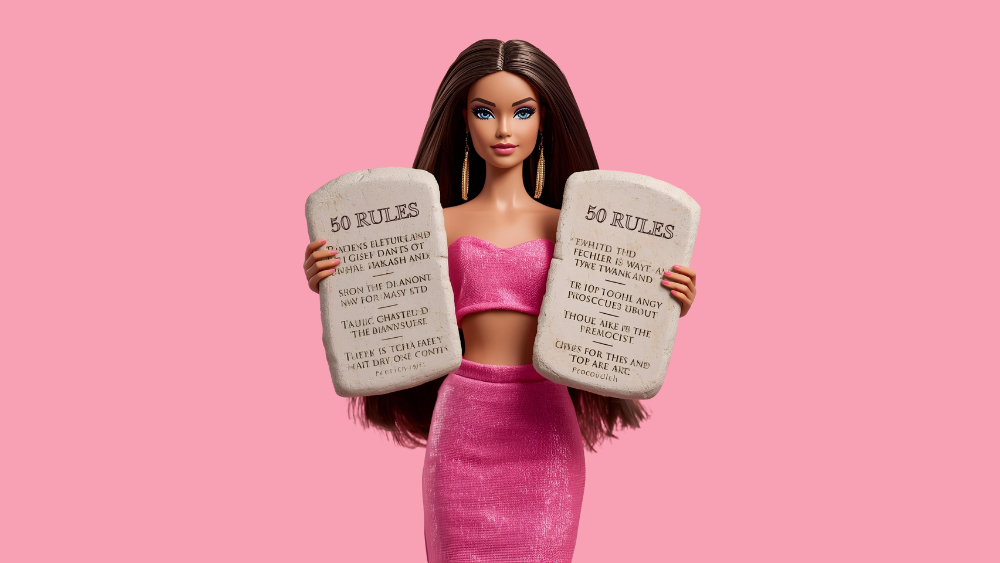
The 50 commandments

The 50 commandments

1. Feminism is the fight for equality

2. There is still no gender equality anywhere on earth

3. Gender roles are a social construct

4. There are no toys for boys and toys for girls

5. There are no clothes for boys and clothes for girls

6. Acting “like a girl” is not shameful or offensive

7. Women have the right to be angry

8. Men have the right to cry

9. Women aren’t destined to be mothers

10. Men aren’t destined to make money

11. Women’s value doesn’t depend on their looks

12. Men’s value doesn’t depend on the size of their penis or wallet

13. Men are just as complicated as women

14. Women want sex as much as men do

15. Men want affection as much as women do

16. Women’s value doesn’t go down when they have sex

17. Men’s value doesn’t go up when they have sex

18. Women don’t owe anyone sex

19. Men don’t owe anyone to want sex all the time

20. Sex is the pleasure, not the penetration

21. Sex without consent is rape

22. Consent is an enthusiastic “YES!”

23. Anything but a “YES!” is a “NO”

24. “YES” is not “yes to everything”

25. Consent can be revoked at any moment

26. Rapists are next-door men

27. Rapists are friends, acquaintances, colleagues, members of the family, lovers, husbands

28. It’s never the victim’s fault

29. It’s always the rapist’s fault

30. The rapist can be your friend and a “Good Guy™”

31. No woman wants to admit she was raped

32. No woman wants to believe she was raped

33. There is no such thing as provocative clothing

34. Our body is not shameful

35. If you watch revenge porn, you are an accomplice

36. Virginity is a fake concept

37. If you are against abortions, you are not pro-life

38. The right to an abortion saves lives

39. Sexism is the bias and discrimination against women

40. There is no reverse sexism

41. Misogyny is extreme sexism, aiming to have power over and control women

42. There is internalized misogyny

43. There are no crimes of passion and honor

44. The murder of women because they are women, is called femicide

45. A femicide is a homicide with misogyny as a motive

46. There is no battle beween the sexes

47. Men and women both grew up with the same dark fairytale

48. Men are also harmed by patriarchy

49. Patriarchy is a human construct

50. Every human construct can be demolished.

Share:

Apart from my TED talk, see me or listen to me speak:

See even more here

Book a session

© 2023 Irini Georgi

Share: